This chaining ensures that the final PCR value represents the whole sequence of loaded components. Michael Peters is a Principal Engineer in Emerging Technologies in Pink Hat’s Workplace of the CTO. He is a senior systems engineer and programmer with an emphasis on DevOps, Security, and Operability and is certainly one of the present maintainers of the Keylime project. His expertise in both startups and enormous tech firms has given him a ardour for shifting safety to the left and making it simpler to understand and use.
Public Key Infrastructure (pki)
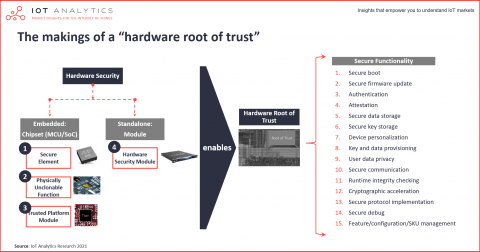
Hardware Roots Of Trust are generally applied in varied units, from servers and private computers to cellphones and Internet of Things (IoT) units. They are often found in Trusted Platform Modules (TPMs), safe enclaves, or dedicated security processors. These parts are embedded directly into the device’s motherboard or system-on-a-chip (SoC) to provide a safe surroundings for important operations. Zero trust is a time period that’s getting lots of buzz, however it can be a bit of a misnomer.
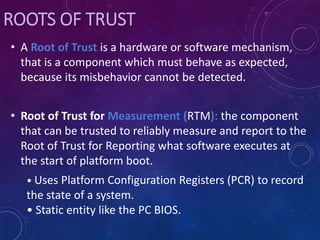
It verifies the integrity of the following stage of firmware, like the BIOS or UEFI. If the verification is successful, management passes to the subsequent stage, which then verifies the following components. This creates a chain of belief, making certain that each loaded element is genuine and untampered earlier than it runs.
Iot Safety: Hardware Root Of Belief
This hardware is designed to be tamper-resistant and supplies a secure starting point for all subsequent security operations. It ensures the integrity and authenticity of the device’s boot course of and software program. A Hardware Root of Trust HRoT establishes an immutable foundation of belief within a computing system. It sometimes begins with a small, unchangeable piece of code or data embedded in hardware, typically a specialised chip. When the system powers on, this trusted hardware element is the very first code to execute.
Every safe system needs an anchor — a component that is trusted unconditionally as a outcome of everything else’s trustworthiness depends on it. It’s the first thing that executes when power is applied, and its integrity determines whether or not anything that follows can be believed. Hardware Roots of Trust are basic for securing devices throughout numerous industries by ensuring system integrity from boot. In distinction, a sensible door lock for a house or hotel might want a PSA Certified Degree 3 chip to protect in opposition to somebody utilizing side-channel attacks within the night to open the door. Cybersecurity, Programme Delivery, and Specialist Companies for organisations that want dependable execution in higher-trust environments. A hardware key store inverts the similar old relationship between software and secrets and techniques.
Choosing An Adequately Safe Rot
A Hardware Root Of Trust HWRoT is a highly safe, immutable part built right into a device’s hardware. It serves because the preliminary level of trust for all subsequent software and firmware operations. This foundational component verifies the integrity of the boot process and working system, ensuring that solely licensed and untampered code can execute. EnsoLab’s Hardware Root of Trust anchors system id, secure boot and cryptographic key safety in hardware, establishing a trusted foundation for the safety layers above. Typically, the RoT is constructed into modern microcontrollers and application processors and isn’t accessible immediately from outdoors of the chip. Chip makers mix trusted hardware corresponding to a processing engine, crypto accelerators, fuses, personal storage and random quantity turbines with a small amount of trusted software program to provide the trusted functions.
Systems that deploy hardware root of trust will use unified extensible firmware interface (UEFI), which offers options such as “Secure Boot” that help prevent attacks or an infection from malware. A TPM may be a discrete chip or a firmware implementation working on the main processor, and those two varieties carry materially totally different isolation and physical-attack assumptions. Because this module is for all intents and functions inaccessible exterior the computer ecosystem, that ecosystem can trust the keys and different cryptographic info it receives from the basis of trust module to be genuine and approved.
- A TEE operating on a system with out Safe Boot offers no real guarantee — the TEE firmware itself might be compromised.
- A secure chip or element that anchors all sensitive safety processes in hardware.
- One of essentially the most primary makes use of of a RoT is to maintain personal crypto keys (encrypted data) confidential, protected by hardware mechanisms and away from the system software that is easier to hack.
- Typically, options begin with an Immutable Boot Loader (sometimes utilizing a PUF), which then starts the BIOS (Basic input/output System) or UEFI validation process.
These trusted functions, and their complexity, are usually hidden behind a software interface in order that software builders who aren’t security experts can use them. More And More, chip vendors are providing a reference Root of Belief with their chips to make life easier for gadget producers. Hardware root of belief might help with a range of safety issues which may be primarily divided into pre-boot and post-boot. Pre-boot can use a pc chip called a Trusted Platform Module (TPM) to verify/measure integrity and safe the boot process from low-level malware. TPM assists with varied actions during post-boot, together with root of trust for authentication.
Data Security Within The Cloud
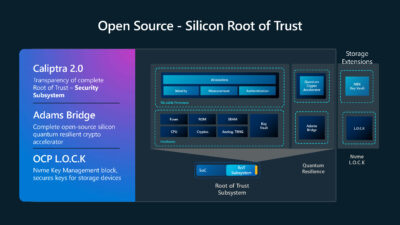
This contains securely updating firmware, managing cryptographic keys, and monitoring attestation reviews. Neglecting these elements can weaken the overall security posture despite the HRoT’s presence. A Root-of-Trust establishes from system boot that licensed software is operating on the system. It serves as the bottom trusted software program that then authenticates and validates the following piece of software loaded, which establishes a series of belief. The system may be https://www.softcourier.com/73665/details-cryptainer-le-free-encryption-software.html simply attacked and not using a Root-of-Trust as a outcome of there would be nothing to authenticate the loaded firmware. The Hardware Root of Belief is a concept which illustrates how a well designed system can act as a self-validating chain, providing a excessive diploma of security assurance.
Root of Belief (RoT) is a source that can at all times be trusted inside a cryptographic system. As A Outcome Of cryptographic security relies on keys to encrypt and decrypt knowledge and carry out capabilities corresponding to producing digital signatures and verifying signatures, RoT schemes usually embrace a hardened hardware module. A principal instance is the hardware security module (HSM) which generates and protects keys and performs cryptographic features within its secure setting.